Clergy Transition

Clergy Transition: An Overview

Welcome! We are currently seeking our next clergy leader, who will be a part-time Priest in Charge. We’re excited about what God might have in mind for us, and we hope you will be too! Please check out the various links on this website for more information.

If you believe God might be calling you to discern with us, please send a Letter of Interest, a current resume or CV, and a current OTM profile to ECCT’s Diocesan Transition Minister, Ms. Amber Page Gehr, at apagegehr@episcopalct.org.

ECCT follows a transition model called Transition is the New Normal (TINN). The information on this model can be found on the ECCT website at www.episcopalct.org. If you would like to know more about TINN or the Priest in Charge process in Connecticut, please reach out to Amber Page Gehr, at apagegehr@episcopalct.org.

Vision Statement

St. John’s Episcopal Church
Is an open, inclusive, God-centered parish:

Recognizing Christ in every person,
Supporting each individual’s Spiritual Journey
Nurturing all God’s children in the Peace of the Lord
Creating a community of sacramental worship,
hospitality, and compassion.

Empowering people to serve and minister,
Reaching out to heal and make new the broken world.
Proclaiming God’s promise in truth and courage.


About St. John’s Parish
160327-congregation
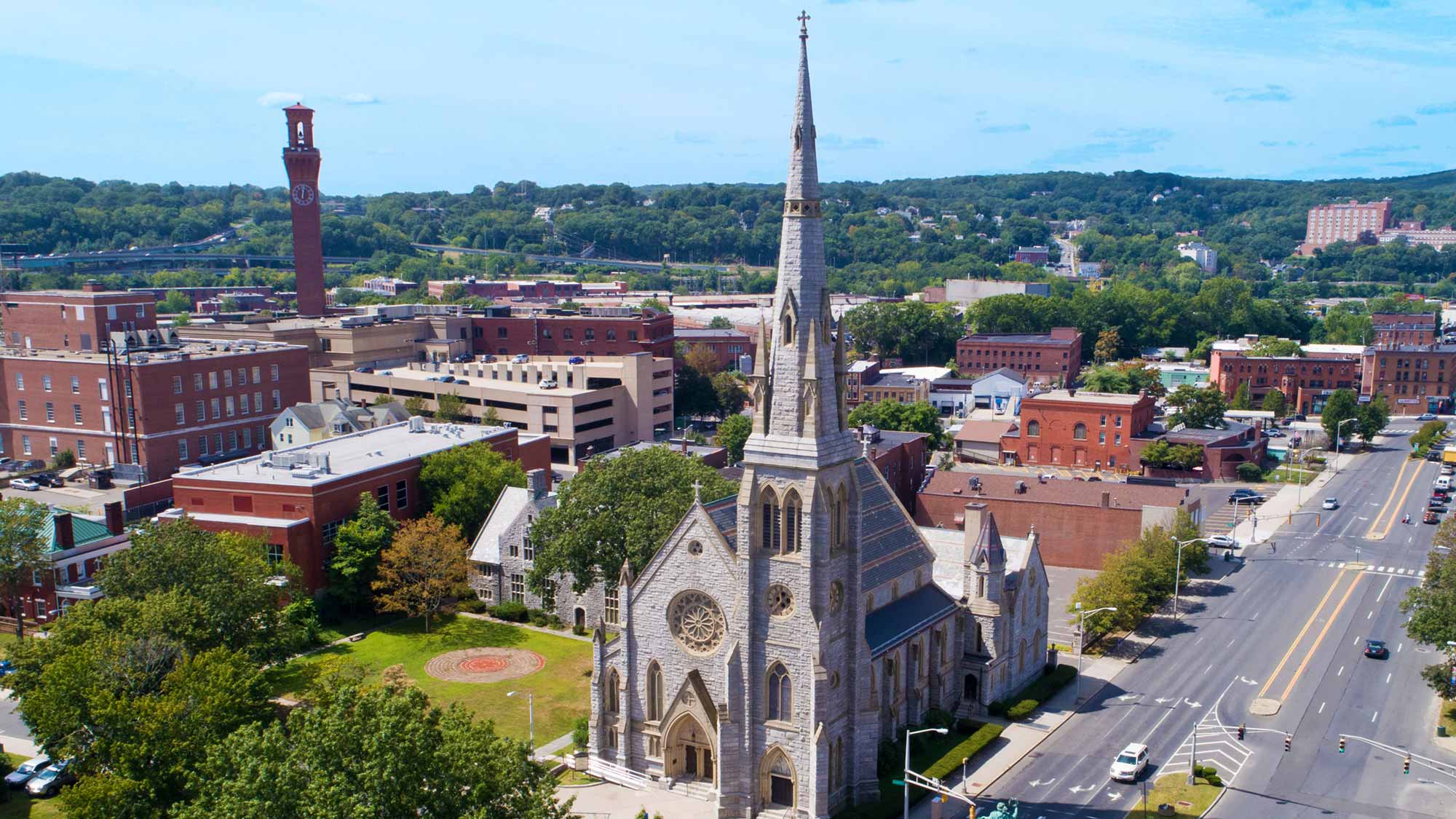
Located prominently at one end of the city green, St. John’s has been a physical landmark and beacon of hope for greater Waterbury since the 18th century. We have given birth to Waterbury institutions such as the Visiting Nurses Association, St. Margaret’s School for Girls (which became part of St. Margaret’s-McTernan School, later known as Chase Collegiate School, which closed in 2020).

We feel enlivened by the Holy Spirit, working through our parish to serve all of God’s children living in Waterbury and its surrounding towns. By being the focal point of Episcopal worship and social outreach programs, St. John’s is an essential part of the fabric of Waterbury. The scope of our community involvement prompted our former Rector, the Rev. Dr. Jim Bradley, to remark, “If St. John’s didn’t exist, Waterbury would have to invent it.”

St. John’s attracts members from nearly 40 communities. The majority of active members live in Waterbury and its neighboring towns of Middlebury, Prospect, Watertown, and Wolcott. We have a growing presence online by live-streaming our services since March 2020.

Our diverse and eclectic mix of parishioners has become like one big “family” where deep and lasting relationships are formed. As is the case with Waterbury’s own population, the number of Hispanic and African-American members at St. John’s continues to grow.

We are a living community who shares a desire to do the work of God and to proclaim the Gospel of Jesus Christ in the everyday world. We do this through community outreach, and by the rich Episcopal liturgy of our worship services rooted in the Book of Common Prayer.


A Brief History of St. John’s
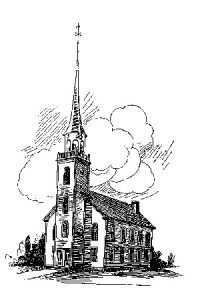
Sketch of St. John's, circa 1797 Sketch of St. John’s First Church, circa 1797

St. John’s traces its roots to the year 1732, when a group of Anglican churchmen under the auspices of the Venerable Society for the Propagation of the Gospel in Foreign Parts established St. James Parish in Waterbury. The first church building was erected in 1743 at the corner of West Main and Willow Streets. The parish outgrew this small building by the turn of the century.The second church was built and consecrated as  St. John’s Church on November 1, 1797. It was located on the Green where the Soldiers’ Monument now stands.St. John’s third church was erected on the current site in 1848 and was totally destroyed by fire on Christmas Eve, 1868. Services were held in a temporary building for over four years.

The fourth and present church was consecrated on June 24, 1873. Designed by architect Henry Dudley of New York, this neo-gothic structure was built on the foundations of the burned building.

A thorough history of St. John’s from its beginnings until the early 20th century may be found in the book, A Narrative and Documentary History of St. John’s Protestant Episcopal Church, by Frederick John Kingsbury, L.L.D., published in the year 1907.

A summary of the church’s history is available at A History of St. John’s Parish, 1677-1990

Major renovations in 1956 included installation of a gallery organ, expansion of the balcony, and modifications to the chancel.

A tornado swept through the Waterbury area on July 10, 1989. This caused one and one half of the towers that surround the spire to fall through the roof, which destroyed two-thirds of the gallery organ. Slates were blown from the roof and several of the stained glass windows were broken. Repairs to the organ and building were completed in 1991.

In 1998, to celebrate the 125th anniversary of the church building, a major restoration of the tower exterior was done to replace mortar joints and sandstone.

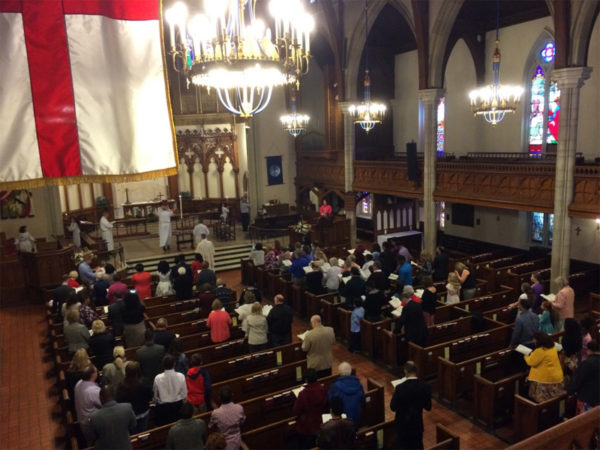
In 2010, the eight chandeliers in the chancel were completely rewired and restored to their original beauty.

Throughout its long history, St. John’s has had a strong tradition of serving the needs of the community. The Waterbury Visiting Nurses Association was founded in the early 1900’s under the direction of Rev. Dr. John Lewis. To this date, St. John’s is home to many 12-step groups, self-help organizations, and programs that help the community in numerous ways. The undercroft (basement) is used to store food for the Food Bank. The Greater Waterbury Interfaith Ministries’ Soup Kitchen was housed in the Parish House for many years, feeding thousands of men, women and children yearly. Outreach Programs continue to flourish.

St. John’s became a center for the training of clergy for the Episcopal Church under Dr. Lewis, whose tenure as Rector lasted 40 years (1901-1940). Nine bishops began their ministries at St. John’s as a curate, assistant, or rector. The Rt. Rev. Andrew Smith, retired Bishop of the Diocese of Connecticut, served as Assistant at St. John’s from 1971 to 1976.

In 2003, we added an Hispanic ministry to serve the needs of this growing community, by creating a noontime Spanish-language service and new outreach opportunities.

A two-year discernment process led to the creation of a Five-Year Plan for the years 2004-09. Known as “Sharing the Vision,” this plan called for growth in the congregation through a long-term commitment to the Hispanic Ministry, and by deeper engagement with youth in the community. The latter resulted in the creation of a Chorister Academy (now known as the Waterbury Youth Chorus) and Saturday Festival of Learning.

In 2007, past clergy, families, old friends, and new friends, came together to celebrate 275 years of St. John’s ministry to the greater Waterbury area with a harvest picnic in the Close. Some of the guests were fourth and fifth generation St. John’s Episcopalians.

St. John’s has been blessed by the generosity of generations past. The parish has attempted to use its resources in a responsible, Christian way. We hope St. John’s will continue as a vital parish in the center of Waterbury and all the surrounding communities, ministering to all people in the name of Jesus Christ.
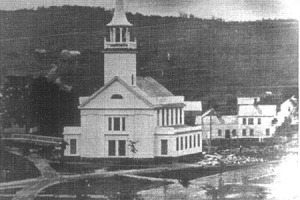
St. John's Second Church, 1839 St. John’s Second Church, 1839
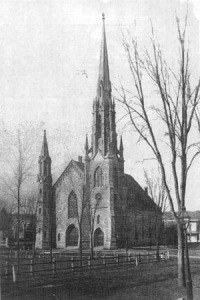
St. John's Third Church, 1857 St. John’s Third Church, 1857
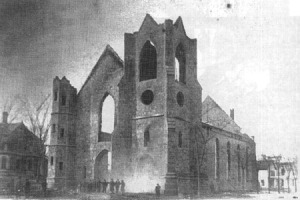
St. John's Third Church was destroyed by fire on Christmas Eve 1868 St. John’s Third Church was destroyed by fire on Christmas Eve 1868
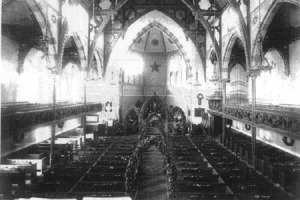
1896int St. John’s Fourth Church, circa 1896

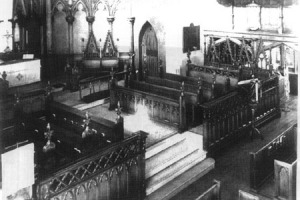
St. John's Interior, circa 1930 St. John’s interior, circa 1930
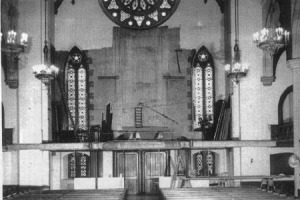
Balcony renovations prior to installation of the McManis Organ, mid-1950s Balcony renovations prior to installation of the McManis Organ, mid-1950s
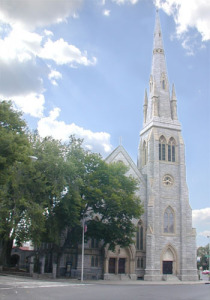
St. John's, 2001 St. John’s exterior, 2001

Buildings & Grounds

The present property of St. John’s consists of a corner lot at the intersection of Church Street and West Main Street at the west end of the Green in downtown Waterbury. The Church was erected in 1873 after a fire destroyed the previous building. The Parish House wing was added in 1920. The entire structure is listed on the National Register of Historic Places. A small, wood-framed garage, at the rear of a 60-space parking lot, is used for storage. The Church Street property is the sole real estate owned by St. John’s.

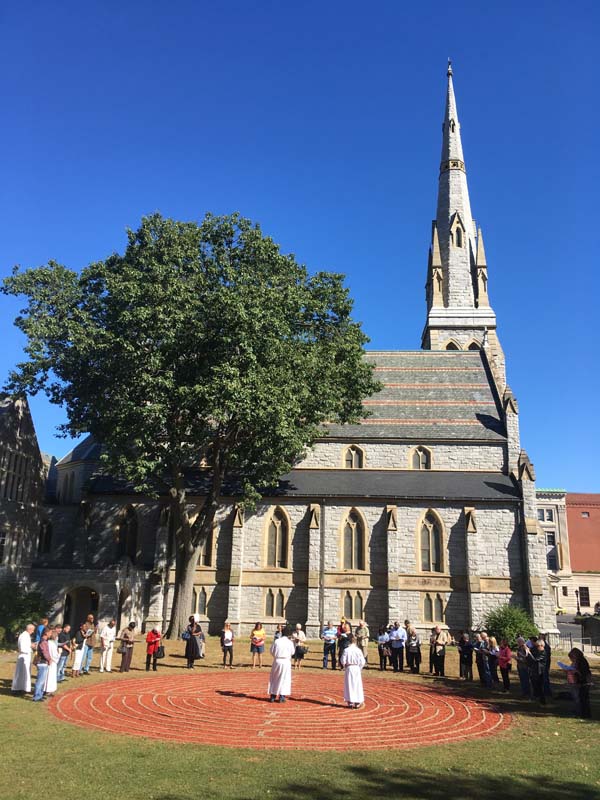
The Church and attached Parish House are of granite exterior and slate roofs. The buildings are arranged in an “L” shape surrounding the Close, a tree-shaded, grassed area. The Close contains a 30 by 15 foot Memorial Garden for the interment of ashes, and a brick labyrinth that was installed in its center in 2003.

The Gallery Organ is a marvelous instrument designed and installed by Charles McManis in 1956. The organ was heavily damaged in 1989 when a tornado dislodged heavy masonry from the steeple, sending it through the roof. It was rebuilt by Mr. McManis and was improved with the addition of several new ranks.  A smaller chancel organ was installed in 1964. Both organs may be played at either of two consoles.

The Church contains a full complement of wonderful stained glass windows – five by Tiffany. One window, found on the northeast corner of the church, was designed by former parishioner Judith McManis, who also designed and crafted many liturgical hangings, and vestments. The theme of the window celebrates St. John’s position in the community and was commissioned as an art glass window in 2004. All windows are protected by exterior plastic covers.

There is a Columbarium in the northeast corner of the sanctuary, which was installed in the 1990s.

The electrical system in the Church is a mix of old and new, while being fully functional and safe. Improvements have been made based on a recent engineering study.  In 2009-10, thanks to generous gifts from individual donors, all eight chandeliers in the nave were restored to their original beauty and were completely rewired. All lights throughout the building and parking areas were replaced with energy saving LED bulbs as a “green” measure, cutting our electric use for lighting by nearly 90 percent.

Christian Formation

Christian Formation – Children’s Sunday school and craft meets at 10:30 to 11:30 in the library. It is run by a small group of parish volunteers with the proper Safe Church training. No classes are held on holiday weekends. It is open to children 4 to 14 years old. We learn about our Savior and His teachings through discussion and fun activities! We see how His messages of love, acceptance, understanding, patience, and forgiveness fit into our lives today.

Objective – to help our young parishioners understand our Lords teachings, and learn how they might use what God is teaching them in their lives and in their community. For the older kids, we will also help them get ready for Confirmation.
Sunday School is sponsored by St. John’s Wings, a group of parishioners who conduct fundraisers and community awareness events.

Meet our Clergy

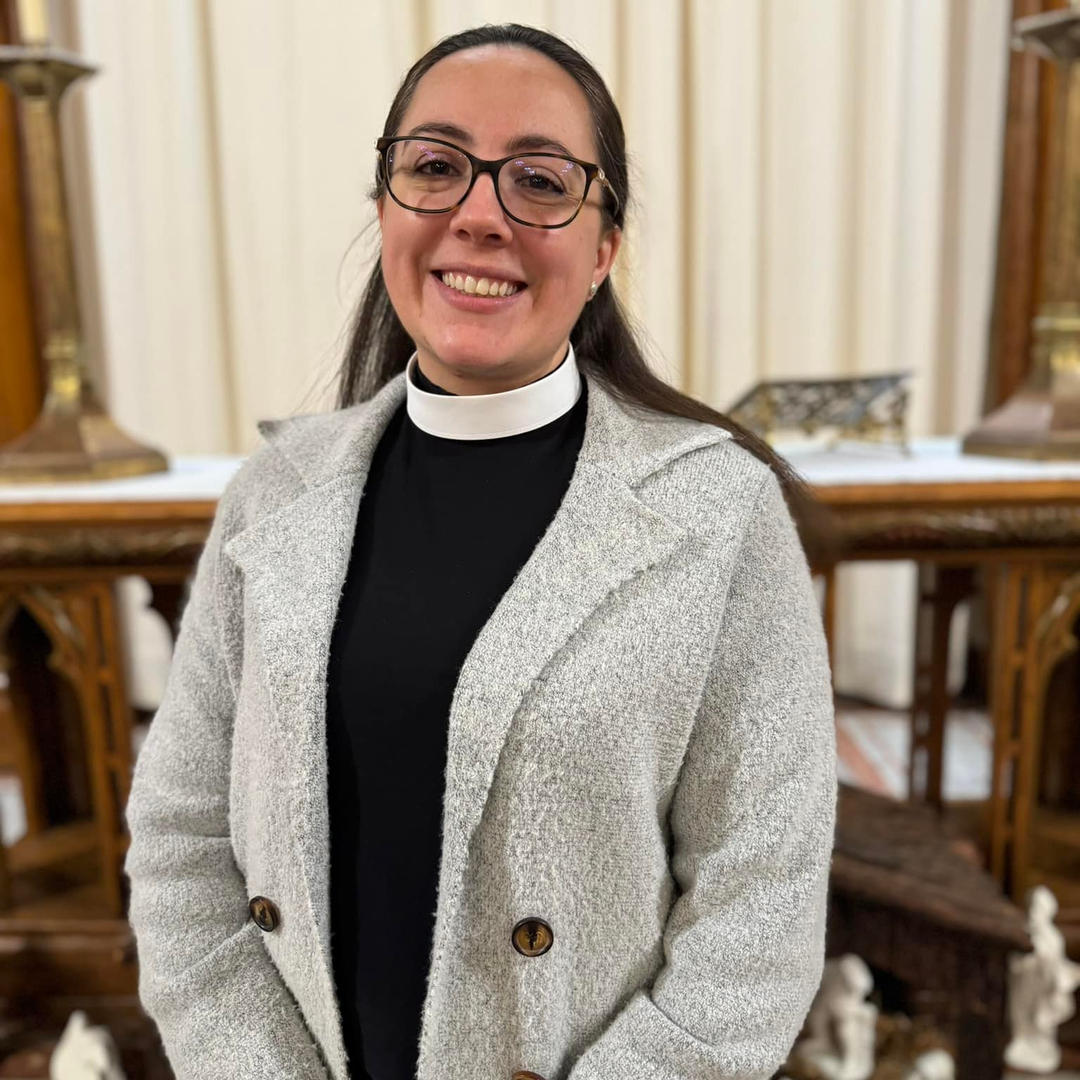
Rev. Roxana Videla, Associate Priest (2025 – present)

I am Reverend Roxana Videla, originally from Argentina, living in this blessed nation of immigrants since 2002. I have been the happy wife of Sergio Olivares for thirty-four years; we have four children and five grandchildren. I started in the Episcopal Church the next day I arrived in this country. My husband had already been at the newly inaugurated Hispanic ministry of All Saints in Meriden, CT, six months ago, so we felt very welcome by this community. I started out as part of the church choir, then I volunteered to teach catechism, then eventually I became part of the Vestry, then I was treasurer, clerk and senior warden of our parish. I led Bible studies and was the director of the music group of praises of Hispanic ministry.

Until I considered discerning the possible call to serve as an ordained leader. And so began my journey to the presbyterate. Seven years later I was ordained as a transitional deacon, and in January 2024 I was ordained to the priesthood, by the grace of God. I have served and will continue to serve with joy and singleness of heart, as the words of the prayer after communion say, which, the first time I heard them, resounded in my mind and heart, and thank God I have not stopped serving since then in the different areas where the Lord has placed me.

I am very pleased and happy to be part of the vineyard of our Lord Jesus Christ, in the St. John’s Waterbury branch. God willing, and with the guidance of the Holy Spirit, we will walk in the direction of love of neighbor in action and in deeds, for the glory and honor of his holy name.

Peace and grace to all. Amen.


Past Clergy (going back to 1737!)


2024 – 2025
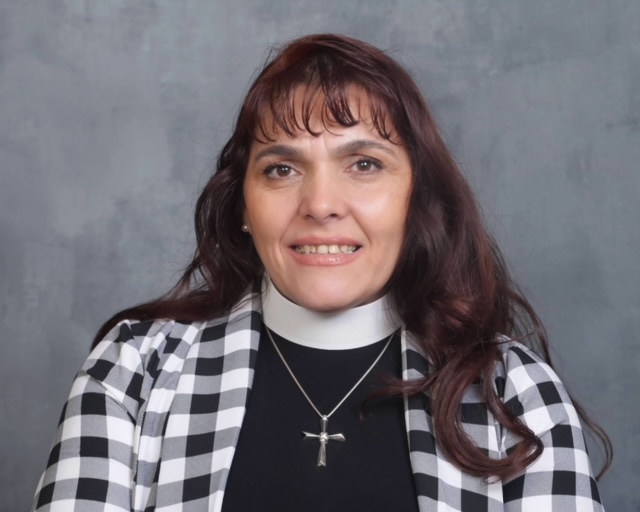
Rev. Jill Morrison, Priest-in-Charge

The Rev. Jill Morrison is from New Orleans, LA and Katy, TX. Growing up in a family of church planters, Rev. Jill first experienced God in both the theatre and the Episcopal Church. With an aim to articulate God’s movement in stories on stage as well as in our lives, Rev. Jill earned a B.F.A. in Theatre with a Minor in Religion from Texas Christian University and an M.A. in Art and Religion at the Graduate Theological Union in Berkeley, CA. Rev. Jill later moved to Connecticut to complete an M.Div. at Yale Divinity School and a Dip. of Anglican Theology at Berkeley Divinity School. Upon graduation in 2020, Rev. Jill quickly joined the faculty at St. Thomas’s Day School as School Chaplain and continues to serve families and staff throughout the school year. Rev. Jill considers her ministry as an intergenerational call to articulate and celebrate our own stories within the context of God’s abundant love for all of creation. Rev. Jill lives in Hamden Connecticut with her husband, two daughters, and their pet birds.


2003 – 2010 and 2016 – 2024
Rev. Armando Gonzalez, Hispanic Missioner

The Rev. Armando Gonzalez is originally from El Salvador. He grew up in the Roman Catholic tradition. As an adolescent, he became a member of the Assembly of God. He finished two years at the University of El Salvador. He moved to Costa Rica to attended a four-year academic program in Theology at the Latin American Biblical Seminary, in Costa Rica. During that process he became a lay preacher at St. Philips and St. James, Episcopal Mission in San Jose Costa Rica, and continued his studies in Sociology, History, and Comparative Religions at the Universidad de Costa Rica, Universidad de Heredia, Costa Rica.

Fr. Armando was ordained as Deacon on May 2, 1976. In 1978 he married Mary Gonzalez, and is now a retired Episcopal priest. They have one child: Antonio. Armando worked for the Dept. of Public Health and also as a Assistant Priest for Good Shepherd Episcopal Church in San Jose Costa Rica.

He immigrated to the USA in 1982. He studied ESL in Austin, University of Texas and served as missioner at Mark’s Episcopal Church. In 1985 he moved to Newton, MA to attend the Andover-Newton Theological School where he obtained a M. Div. He has served as Hispano-Latino Missioner Priest at St. John’s Episcopal Church, Jamaica Plain, Boston, MA., St. James Episcopal Church, New London, St. Mark’s New Britain, and St. John’s Waterbury, CT.


2016 – 2022
Rev. Michael Carroll, Priest-in-Charge

The Rev. Michael E. Carroll (b. 1948) is a seasoned Episcopal priest with deep roots in Waterbury, Connecticut. He began his ministry as a vocational deacon at St. John’s Episcopal Church in Waterbury from 2004 to 2014. In 2014, he was ordained to the priesthood and served as priest-in-charge at All Saints Parish in Meriden and St. John’s on the Green in Waterbury.

Fr. Carroll is a graduate of St. Mary’s Seminary College in Baltimore, Maryland, where he earned a Bachelor of Arts in Philosophy in 1970. He also holds a Master of Arts from the University of St. Joseph Counseling Institute, obtained in 1999. His professional background includes roles as a campus minister, religious educator, and mental health clinician.


2012 – 2016
Very Rev. Dr. Amy D. Welin, Interim Rector

The Very Rev. Dr. Amy D. Welin is an Episcopal priest with a rich background in both pastoral leadership and academic study. She served as the Interim Rector at St. John’s Episcopal Church in Waterbury, Connecticut, in September 2012. During her tenure there, she notably conducted a funeral service in 2013 for “Fortune,” an enslaved African American man who died in 1798. This service honored his life and addressed the historical injustices he endured.

In August 2017, Dr. Welin was installed as the Dean of St. Stephen’s Episcopal Cathedral in Harrisburg, Pennsylvania. In this role, she was involved in various initiatives, including serving on the Council of Trustees and engaging with missions related to justice and inclusion within the church.

Dr. Welin’s diverse background includes roles as an instructor of medieval and world history, an insurance claims processor, and a pastoral associate in a large Midwestern church. Her academic credentials and commitment to service have significantly contributed to her leadership within the Episcopal community.


<

2011 – 2012
Rev. Canon Robert Miner, Interim Rector

The Rev. Canon Robert J. Miner is an experienced Episcopal priest with a history of serving in key roles within the church. He served as Interim Rector at St. John’s Episcopal Church in Waterbury, Connecticut, from 2010 to 2011, and was appointed Interim Rector at St. Peter’s Episcopal Church in Bennington, Vermont, in October 2003, where he fostered reflection on the church’s needs.

In addition to his parish work, Rev. Canon Miner has contributed to ecumenical relations, acting as the Episcopal Church’s liaison to the Ecumenical and Interfaith Relations office. He is also recognized for his community engagement, including blessing motorcyclists at the annual “Bike Blessing at the Beach” event in New London, Connecticut.

Rev. Canon Miner’s career reflects his dedication to both church leadership and community service, with a focus on strengthening relationships within and beyond the church.


2010 – 2011
Rev. Norman MacLeod, Interim Rector

The Rev. Norman MacLeod served as the Interim Rector at St. John’s Episcopal Church in Waterbury, Connecticut, beginning on July 7, 2010.

Before his tenure in Waterbury, Rev. MacLeod had a distinguished career in various Episcopal congregations. He served as the Interim Priest at St. James Episcopal Church in Keene, New Hampshire, and held positions at other churches, including St. John’s Episcopal Church in Portsmouth, New Hampshire.

Rev. MacLeod is also known for his contributions to environmental discussions, as evidenced by his writings on the subject.

His leadership at St. John’s Episcopal Church in Waterbury was marked by a commitment to community engagement and spiritual growth. During his time there, he emphasized the importance of faith in addressing contemporary issues and fostering a welcoming environment for all.

Rev. MacLeod’s tenure at St. John’s concluded in 2011, after which he continued his ministry in various capacities.


1989 – 2010
Rev. Dr. James G. Bradley, Rector

The Rev. Dr. James G. Bradley (b. 1947), an Episcopal priest since 1975, has dedicated over four decades to ministry and community service. A native of West Virginia, he pursued his theological education at Harvard Divinity School and Virginia Theological Seminary. Throughout his career, Dr. Bradley has served in various capacities, including as Rector of St. Paul’s Church in New Haven and St. John’s Episcopal Church in Waterbury, Connecticut. During his tenure at St. John’s, which began on June 15, 1989, he led the congregation through significant challenges, such as rebuilding efforts following a severe storm that caused over $1 million in damages shortly after his arrival. Under his leadership, the church experienced steady growth in both membership and financial support. Dr. Bradley emphasized creating an open and inclusive community, aligning with the church’s vision statement crafted in 1992. Beyond his pastoral duties, he has been actively involved in community initiatives, including organizing ecumenical healing services to address local issues. Currently, Dr. Bradley serves as the Priest-in-Charge at Trinity Episcopal Church in Milton, Connecticut, and resides in Cheshire with his wife.

From St. John’s website archives, 2006:  According to Fr. Bradley, “St. John’s has a remarkable opportunity to be a model of the Future Church. People long for a warm and engaging community of faith where they find and be found by God. St. John’s openness to the transforming power of the Spirit can lead to new paradigms for community and ministry as we move to the next millenium. If we are prayerful and committed, Christ will show us the way.”


1988 – 1989
Rev. Jeffrey Dugan, Interim Rector

1979 – 1987
Rev. James G. Wilson, Rector

From an online obituary in the Stratford Patch: The life of The Rev. James G. Wilson (1940-2023) was a testament to his faith, and his journey was one of service and dedication to his community. A proud graduate of Massapequa High School, Jim served as Senior Class President in 1958. His thirst for knowledge led him to Rensselaer Polytech Institute for three years before he graduated from Adelphi University. Heeding the call of the divine, Jim furthered his education at Berkeley Divinity School before undertaking a one-year Fellowship at Drew University in Campus Ministry.

Jim’s calling as an Episcopal priest saw him serve in numerous roles with grace and humility. He was a Curate at St. George Episcopal Church in Hempstead, NY, St. Luke’s Episcopal Church in Bohemia, NY, and St. John Episcopal Church in Oakdale, NY. He led his flock with compassion and wisdom as the Rector of St. John’s Episcopal Church in Waterbury, CT, and as the Summer Minister at St. Andrew Episcopal Church on Fire Island, NY. His dedication to his faith led him to the Episcopal Church Center in Manhattan, NY, where he served first as an Assistant and later as a Director in the Deployment Office. Even in his retirement, Jim continued to serve as the Resident Priest at Christ Church in Stratford, CT.


1978 – 1979
Rev. Peter Holroyd, Priest-in-Charge

From an online memorial: The Rev. Peter Holroyd (1930-1995) was born in Stockport, England, son of the late Stanley and Elizabeth (Ratcliffe) Holroyd. He received honor degrees in botany in 1955 from the University of Manchester, England, and came to the United States in the late 1950s. He worked as a research microbiologist for the Shearing Co. in new Jersey before entering Berkeley Divinity School in New Haven, where he received his master of divinity degree, graduating magna cum laude.

Ordained in 1964 at St. John’s Episcopal Church of Waterbury, where he has been curate, interim, and priest associate, and was organizer of the Earth Ministry. In 1990 he was invited to the Global Forum Conference on the Environments Moscow. He also was chair of the Environmental Task Force of the Episcopal Diocese of Connecticut, and was a co-founder of the Episcopal Environmental Coalition. The Rev. Mr. Holroyd retired in 1992 as head of the Philosophy and Religion Department at The Taft School, where he served for 23 years. He also was the chaplain at Taft. Part of his instructions included studies regarding the Holocaust. He was deeply devoted to making his students aware of its atrocities.


1970 – 1978
Rev. Michael S. Kendall, Rector

1960 – 1970
Rev. James DeWolf Perry IV, Rector

The Rev. James DeWolf Perry IV (1908-1989) was an Episcopal priest who served in various parishes over a 52-year ministry. His tenure included positions in Norfolk, Virginia; Provincetown, Massachusetts; Newtonville, Massachusetts; Charleston, South Carolina; Waterbury, Connecticut; and Fitchburg, Massachusetts. In Fitchburg, he was the priest-in-charge of the Church of the Good Shepherd from 1970 to 1976 and later served at Christ Church in 1976. The Rev. Mr. Perry served on the Commission on Ministry of the Diocese of Western Massachusetts since 1971. In addition, he served both former Presiding Bishop Alexander D. Stewart and the Rt. Rev. Andrew Wisseman, bishop of Western Massachusetts, as pastoral counselor to clergy and clergy families. He was an early advocate of admitting women to the ordained ministry and supported and encouraged new forms of worship in the Church. Throughout his ministry he sought ways to open the Church to cooperation with those of all other denominations.

Read an article from the April 27, 1936 issue of Time magazine entitled Religion: Father to Son which describes Rev. Perry as a third-generation clergyman whose father was the Eighteenth Presiding Bishop of the Episcopal Church USA (1930-1937).


1958 – 1960
Rev. David O. Cowles, Priest-in-Charge

1951 – 1958
Rev. John R. Yungblut, Rector

From the online site of Touchstone, Inc: The Rev, John Yungblut (1913-1995) was a lifelong student of the mystical approach to religious experience and of the ideas of C. G. Jung and Teilhard de Chardin. He aspired to be an advocate for the mystical heritage in Christianity, up-dated by Jung’s myth of the psyche and Teilhard’s myth of cosmogenesis, a universe still being born.

John served in the Episcopal ministry for 20 years before becoming a member of the Religious Society of Friends. He then served successively as Program Director of Quaker House, Atlanta; Director of International Student House, Washington, DC; Director of Studies at Pendle Hill, Wallingford, PA; and Director of the Guild for Spiritual Guidance, Rye, NY.

In 1978, John founded Touchstone, Inc., as a non-profit with the vision of quickening the aspiration and longings in individuals who pursue the inward journey to the Self, God within. Touchstone seeks to accompany those on a transformative journey of becoming more alive, attuned, and responsive to serving that which lies deepest within. Penelope Yungblut, a Zurich trained Jungian analyst, became the director of Touchstone, Inc. following John’s death in 1995.

John is remembered for the warmth and wisdom he offered, the retreats he led, and the many lives he touched as a spiritual guide, counselor, and beloved mentor. He leaves a lasting legacy in the five books and seven pamphlets he published. In his writings, John integrates the Judeo-Christian tradition with two revolutionary schools of thought, Jungian depth psychology and Teilhard’s concept of ongoing evolution. He was persuaded that the Christian tradition needs to assimilate new information and evolve or it will wither and die.


1951
Rev. Joseph Koci, Jr., Priest-in-Charge

The Rev. Joseph Koci, Jr. (1921–1982) was an Episcopal priest who served in various congregations during his ministry. In 1958, he was appointed as the 16th rector of St. Peter’s Church in Philadelphia, Pennsylvania, where he served until 1961. Prior to his tenure at St. Peter’s, Rev. Koci served as the Priest-in-Charge at St. John’s Episcopal Church in Waterbury, Connecticut.


1948 – 1951
Rev. Robert M. Hatch, Rector

Born in Brooklyn, New York, The Rev. Robert M. Hatch (1910-2009) pursued his education at St. Mark’s School in Southborough, Massachusetts. He graduated from Harvard College in 1933 and later earned a Master of Arts in American History from Columbia University. He also attended the Episcopal Theological Seminary in Cambridge, Massachusetts.

Ordained in May 1940 by Bishop Henry Knox Sherrill, Hatch began his ministry in the Episcopal Diocese of Connecticut, serving as Rector of St. John’s from 1948 until 1951. He was consecrated as Suffragan Bishop of Connecticut on April 17, 1951, in a ceremony held at St. John’s Church. In 1957, he became the fourth Bishop of the Episcopal Diocese of Western Massachusetts, a position he held until 1970.

During his tenure, Bishop Hatch was instrumental in establishing new missions and was a vocal supporter of the Civil Rights Movement. He was also actively involved in environmental causes, reflecting his broad commitment to social justice.

1941 – 1948
Rev. Francis O. Ayres, Rector

The Rev. Francis O. Ayres served as the rector of St. John’s Episcopal Church in Waterbury, Connecticut, from 1941 to 1948. After his time in Waterbury, Rev. Ayres was associated with a lay training center in Brighton, Michigan, from 1948 to 1967. This community, known as Parishfield, was managed by clergy including Rev. Ayres, Rev. Roger Barney, and Rev. James Guinan, along with their families and a deaconess, Olive Robinson.

Rev. Ayres authored “The Ministry of the Laity: A Biblical Exposition,” published in 1962, which explores the role of laypeople in the church.


1940
Rev. Samuel A. Budde, Priest-in-Charge

1901 – 1940
Rev. Dr. John N. Lewis, Jr., Rector

The Rev. Dr. John N. Lewis, Jr. (1869-1940) served as the rector of St. John’s Episcopal Church in Waterbury, Connecticut, from 1901 to 1940. During his nearly four-decade tenure, he significantly contributed to both the church and the broader Waterbury community.

Under Dr. Lewis’s leadership, St. John’s became a pivotal center for clergy training within the Episcopal Church. Notably, nine bishops began their ministries at St. John’s as curates, assistants, or rectors during this period. This emphasis on nurturing clergy underscored the church’s commitment to developing future leaders for the Episcopal community.

Beyond his ecclesiastical duties, Dr. Lewis was instrumental in founding the Waterbury Visiting Nurses Association in the early 1900s. This initiative showcased his dedication to addressing public health needs and providing essential medical services to the residents of Waterbury. The association continues to serve the community, reflecting Dr. Lewis’s lasting impact on local healthcare.

In recognition of his substantial contributions, Dr. Lewis was inducted into the Waterbury Hall of Fame. This honor celebrates individuals who have made significant impacts on the city’s history and development. Dr. Lewis’s legacy in spiritual leadership, community service, and public health remains a cornerstone of Waterbury’s rich history.

Read Dr. Lewis’s biography at the Waterbury Hall of Fame.


1884 – 1901
Rev. Dr. Edmund Rowland, Rector

From St. John’s History Book: Under The Rev. Dr. Edmund Rowland, It was decided to Introduce an entire male choir, the soprano and alto being carried by boys’voices and all the choir to be uniformly dressed In cassocks and cottas. The changes were reported to the Vestry on January 18, 1893.


1880 – 1883
Rev. Dr. Rob Roy M. (McNulty) Converse, Rector

The Rev. Dr. Rob Roy McGregor Converse (1844-1915) was an American Episcopal priest, educator, and scholar renowned for his contributions to theology and academia. Born on November 16, 1844, in Cincinnati, Ohio, he was the son of Caleb Jefferson McNulty and Caroline Abbott Converse.

At the age of 16, Converse enlisted in the Union Army during the American Civil War, serving as a private in the 11th Pennsylvania Reserves from September 1861 to July 1865. He was wounded at the Battle of Gettysburg and later became a prisoner of war at Andersonville prison.

After the war, Converse pursued higher education, earning degrees from Washington College, Jefferson College, Griswold College, and Hobart College. He was ordained as an Episcopal priest and served as rector at several churches, including St. John’s Church in Waterbury, Connecticut.

In 1887, Converse married Mary Amelia Howard in Corning, New York. They had a son, Rob Roy Stearns Converse.

Converse was also a distinguished scholar, serving as a professor of mathematics and science and chaplain at Washington and Jefferson College and Hobart College. He was president of the Archaeological Institute of America and a fellow of the American Geographical Society.

The following sketch of him in the National Cyclopedia of American Biography was written by a distinguished friend:

“Dr. Converse’s work in the ministry has been successful and permanently useful. His characteristic qualities are his personal magnetism (“contagiousness” would be a better word) and his encyclopedic knowledge, whether it be a question of theology or history, of the style of Sophocles or the habits of fishes, of a question in physics or literature, his knowledge is curiously wide, minute, and accurate. It is to be regretted that one whose information is so great and whose mind is so vigorous and active should not have given more public expression to his thought.”

He passed away on September 20, 1915, in Rochester, New York.


1877 – 1880
Rev. Dr. Joel Foote Bingham, Rector

The Rev. Dr. Joel Foote Bingham (1827-1914) was valedictorian of his class at Yale in 1852 and studied at the Union Theological Seminary. He was head master of the Classical Schook, Bible House, New York from 1852-1858 and then entered the Congregational ministry. He was pastor of churches at Cleveland, Buffalo, and Augusta, Maine. In 1871 he was ordained a priest in the Protestant Episcopal Church and was a rector in New Haven, Portsmouth, NH and Waterbury. From 1879-1888 he was engaged in literary work. For ten years Dr. Bingham was a lecturer on Italian literature at Trinity College.


1837 – 1877
Rev. Dr. Jacob L. Clark, Rector

The Rev. Dr. Jacob Lyman Clark (1807–1877) was a significant figure in Waterbury, Connecticut’s religious community during the 19th century. Born in Westhampton, Massachusetts, he became the rector of St. John’s Episcopal Church in Waterbury in 1837, a position he held for four decades. Under his leadership, the Sunday School became a prominent part of the church’s activities.

In his personal life, Rev. Clark married Mary Thankful Scovill, the youngest daughter of James Scovill, on April 28, 1839. Mary passed away in 1842. Despite being widowed, Rev. Clark continued his dedicated service to the church and community.

To honor his memory, a stained glass window titled “Baptism of Christ” was installed in Trinity Episcopal Church as a memorial to Rev. Clark, donated by the children of St. John’s Church.

Rev. Clark is interred at Riverside Cemetery in Waterbury.

From St. John’s History Book: Since Dr. Clark’s day the Sunday School became a prominent part of the Church’s work. Dr. Clark arranged for the Anniversary of the Church School to be held at the same time as the Archdeaconry meeting. The whole afternoon was given upto It. The children assembled In the church and marched, with the county clergy attheir head to a public hall where hymns were sung, speeches made, gifts and food were distributed to the children. The names of those who had not missed any Sunday School during the years were read.


1833 – 1836
Rev. Allen C. Morgan, Rector

1830 – 1832
Rev. William Barlow, Rector

1814 – 1830
Rev. Alpheus Greer, Rector

The Rev. Alpheus Geer (1788-1866) was born at Kent, August 7, 1788, graduated at Union college in 1813, was ordained deacon by Bishop Hobart in New York city, June 12, 1814, and priest by Bishop Griswold at Middletown, early in 1815.

In September, 1814, the Rev. Alpheus Geer was invited to become rector, at a salary of $600, “provided Gunntown will pay one-third for his services one-third of the time.” The vote as finally passed was to pay him $400 for two-thirds of his time, leaving Mr. Geer and Gunntown to settle for the remainder.

He remained in Waterbury nearly sixteen years, from the fall of 1814 to the spring of 1830. He went from here to Hebron, where he remained about fourteen years, and afterwards preached at a number of places in this state. He died at Norwich, February 3, 1866. While here he lived first on South Main street and later in the Judge Hopkins place, on West Main street.

The period of Mr. Geer’s pastorate was one of quiet and moderate prosperity. There was not at that time much growth in the town, and as a semi-farmer clergyman, who was expected to live to some extent off the product of his glebe, he was a very fair representative of the country clergy of his time. On Sunday, October 20, 1816, he presented to Bishop Hobart of New York, then acting as bishop in this diocese, which was temporarily without a bishop, a class of 226 for confirmation, being the largest class ever confirmed by Bishop Hobart.


1807 – 1814
Rev. Virgil Horace Barber, Rector

From a Wikipedia online biography: The Rev. Virgil Barber (1782-1847) was born May 9, 1782, in Claremont, New Hampshire, where his father, Daniel Barber, was an Episcopal priest. Virgil was educated at the Cheshire Academy, then went to Springfield, Vermont, to study surveying. In 1801 he entered Dartmouth College. Virgil was ordained an Episcopal priest and in 1807 became pastor of St. John’s Episcopal Church in Waterbury, Connecticut. He then married Jerusha Booth of Vergennes, Vermont.

In 1814, Barber became principal of the Episcopalian Academy at Fairfield, New York, He said that the first step leading to his conversion to Catholicism was the reading of “A Novena to St. Francis Xavier”, a book belonging to an Irish servant girl. This raised doubts concerning his Protestant faith, which his bishop, John H. Hobart, and other Episcopalian ministers could not solve for him.

During a visit to New York City, in 1816, he called on Benedict J. Fenwick, with the result that he resigned his Episcopalian charge at Fairfield, and went to New York, where he and his wife Jerusha were received into the Roman Catholic Church with their five children.


1797 – 1806
Rev. Dr. Tillotson Bronson, Rector

From the online McClintock and Strong Biblical Cyclopedia: The Rev. Dr. Tillotson Bronson (1762-1826), a Protestant Episcopal clergyman, was born at Plymouth, Connecticut. Under the Reverend John Trumbull, the Congregational minister of Watertown, he began his preparation for college, teaching a school, meantime, at Waterbury. In 1786 he graduated at Yale College, and was ordained deacon September 21, 1787.

The following October he was called to officiate in the churches of Stratford, Vermont, and Hanover, N.H. He returned to Connecticut in 1788, and on February 25 was ordained priest in New London. In October he resigned his charge, and in 1792 went to Boston, supplying the place of Reverend William Montague, rector of Christ Church, during the latter’s travels abroad. In 1793 he became rector of the churches at Hebron, Chatham, and Middle Haddam, in Connecticut.

Two years thereafter he was called to the rectorship of St. John’s Church, Waterbury, where he remained about ten years. Having been appointed to conduct the Churchinan’s Magazine, published at New Haven, he resigned his pastorate in 1805, and removed thither. The publishing office of the magazine was removed to New York after two or three years, and his connection therewith accordingly ceased. The Diocesan Convention of Connecticut elected him principal of the academy at Cheshire in the latter part of 1805. The Churchman’s Magazine having been revived he had again undertaken to edit it, while at the same time performing his duties at the academy; but his health was now seriously, impaired, and he declined a re-election as a member of the Standing Committee, a position which he had held for the twenty preceding years. He died at Cheshire, September 6, 1826. Very often he had been a delegate to the General Convention; and he was a trustee of the General Theological Seminary and of Washington College. See Sprague, Annals of the Amer. Pulpit, 5:358.


1796 – 1797
Rev. William Green, Interim Rector

1795
Rev. Dr. Alexander V. Griswold, Interim Rector

The Rev. Dr. Alexander Griswold (1766–1843) was a significant figure in the early Episcopal Church in the United States. He served as the 5th Presiding Bishop of the Episcopal Church and was also the Bishop of the Eastern Diocese, which included several New England states.

1791 – 1793
Rev. Seth Hart, Rector

1790 – 1791
Rev. David Foote, Rector

1790
Rev. Chauncey Prindle, Interim Rector

The Rev. Chauncey Prindle (1753–1833) was an Episcopal clergyman from Connecticut who dedicated nearly five decades to ministry. Born on July 13, 1753, in Oxford, Connecticut, he was the son of Eleazer Prindle and Anna Scovill. He graduated from Yale College in 1776 and received his Master of Arts degree in 1779.

In June 1787, Prindle was ordained as a deacon in the Episcopal Church at St. John’s Church in Stamford, Connecticut. He was ordained as a priest on February 24, 1788, at St. James’ Church in New London, Connecticut.

Prindle’s ministry included serving as the pastor of St. Peter’s Church in Oxford, Connecticut, for several years. He was known for his sound intellect, integrity, and firm principles. He also served in Watertown, Connecticut, and was engaged to preach at St. Michael’s Church in Litchfield, Connecticut, in 1806.

It is said of him that “he was a most worthy and indefatigable man, and it is related as an instance of his punctuality in the discharge of duty, that on one occasion, when he was to preach at Waterbury, he found the Naugatuck much swollen by a flood, and rather than fall in his appointment he plunged in on his horse and swam the stream. He was noted for a sound and forcible intellect and stern integrity, and was orthodox and firm in his principles. He was a useful minister.”

In 1781, Prindle married Rosannah Bronson, and they had several children, including Sarah Prindle, who married Baldwin.

Reverend Prindle passed away on August 25, 1833, at the age of 80, and was buried in Gunntown Cemetery in Naugatuck, Connecticut.


1789 – 1790
Rev. Solomon Blakeslee, Rector

1759 – 1788
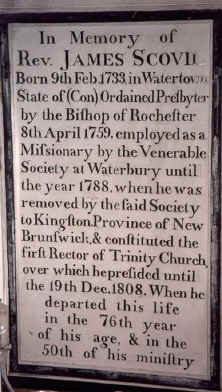
Rev. James Scovil, Rector (First Resident Rector)

From an online biography: The Rev. James Scovil (1733-1808) was born on February 9, 1733 in Watertown, Connecticut, the son of Lt. William Scovil (probably a Lieutenant in the local militia). The Scovils had originally come from the town of Escoville in Normandy. They settled in England in 1066, at the time of the Norman Conquest.

James Scovil’s early years were spent in rural employment, as his father had not intended to give him a profession. In his seventeenth year, while employed as a weaver, he met with an accident which changed his life. He was severely lamed, and his father placed him with an eminent surgeon who lived in a nearby town. There he became the pupil of Mr. Southmayd, minister of the Parish. This gentleman found him such an apt scholar that he recommended a liberal education, which was approved by James’ father.

When fully recovered, James returned home where he pursued his studies with such vigour that in three years time he entered Yale College, graduating with his Bachelor of Arts degree in 1757. He followed that by going to King’s College (Columbia), New York, to study for his Master’s Degree. Two years before graduation, his father died, leaving him 200 pounds to complete his education. Rather than continuing on at King’s College, James went to England where he became an ordained minister of the Society for the Propagation of the Gospel (the Society which supplied ordained Church of England ministers in America). Rev. James Scovil returned to Waterbury, Connecticut in 1759, and took up his duties as Parish Rector – receiving from the S.P.G. 30 pounds annually.


1749 – 1759
Dr. Richard Mansfield, Missionary

1744 – 1746
James Lyons, Missionary

1739 – 1743
Theophilus Morris, Missionary

Theophilus Morris was an Anglican missionary affiliated with the Society for the Propagation of the Gospel in Foreign Parts (SPG), an organization established in 1701 to promote the spread of Christianity, particularly in the British colonies of North America and the Caribbean. Morris’s missionary work took place during the 18th century, a period when the Anglican Church was seeking to establish its presence and increase its influence in the American colonies.

Morris was dedicated to spreading the Christian faith among indigenous peoples and enslaved Africans, often in regions where Anglicanism had not yet gained a foothold. His work in these communities involved more than just religious preaching; it included the establishment of churches, schools, and other social institutions. He worked alongside other missionaries to build a foundation for the Anglican Church in the colonies and played a pivotal role in shaping the spiritual and cultural dynamics of the areas he served.

Under the auspices of the SPG, Morris helped to implement the organization’s larger mission to provide clergy for the colonies, support local Christian communities, and foster Christian education. The SPG, at its peak, was instrumental in building churches and schools, especially in areas where religious pluralism and the challenges of colonial life made it difficult to maintain an organized Christian presence.

Morris’s work reflects the broader aims of the SPG, which emphasized outreach, education, and the integration of local cultural practices with Christian teachings. His efforts contributed to the growth and establishment of the Anglican faith in the American colonies, influencing both religious and social practices of the time.


1737 – 1739
Jonathan Arnold, Missionary

Ministries Inside Our Walls

St. John’s Ministers to those who need a safe place to host AA meetings, NA meetings  and  other groups hosted by outside entities.

AA Meetings: Currently AA meetings are held on Fridays at 7:30pm

NA Meetings: Currently NA meetings are held on Tuesdays at 10:30 am

The Naugatuck Valley Project also rents space on the third floor.

The Labyrinth is open for use during daylight hours.


Ministries Outside Our Walls

Outreach Committee Major Projects

  • Greater Waterbury Interfaith Ministries – We are proud supporters of the GWIM soup kitchen and food pantry. In addition to food collections during the year, we also make monetary donations to help feed the members of our Waterbury community who need help. The Director, Barbara Dublin, does not hesitate to reach out to us when there are special needs as she knows there will be a positive response.
  • CT Department of Children and Family – We have worked with social workers from this agency for many years. We participate as a parish in three main projects. At Easter we have provided age specific Easter baskets for children who otherwise might not receive one. We have participated in Back-to-School projects to provide back packs filled with supplies or sometimes gift certificates for individuals to shop. The parish especially enthusiastically responds to provide gifts for children for Christmas. A Christmas tree is placed in the foyer decorated with gift tags that include the age and gender of the child. The tags just about fly off the tree as parishioners pick their Christmas child. It is wonderful to see all the gifts that are given.
  • Swords to Plowshares – Swords to Plowshares is an organization, affiliated with the Episcopal Church, which melts down guns which have been collected by local police departments and makes them into tools. The tools are then donated to agricultural programs. They also sell items on their website. Our Outreach Committee has supported generous donations to this project. One of the founders of this organization is Retired Suffragan Bishop James Curry. On May 22,2022, Bishop Curry preached at our 9:30 service and following the service did a blacksmithing demonstration in the Close. We invited our neighbors, First Congregational Church to join us. It was a great experience, especially for those who were chosen to participate. We hope to make this an annual event to promote the reduction of gun violence. Please visit the Swords to Plowshares website s2pnortheast.org. 
  • IRIS – Integrated Refugee and Immigrant Services is the ECCT affiliate of the National Church Episcopal Migration Ministries. The CT affiliate has processed 310 Afghan refugees in our state. They provide a wide range of services including housing, employment, health, legal, education, and case management. They have sixty-four paid employees and over three hundred volunteers. Their 17 Board Members serve without compensation. Our Outreach Committee has supported generous donations to this project. One of the principal participants in the effort is Retired Bishop Andrew D. Smith, who served as an assistant at St. John’s before becoming the Rector of St. Michael’s in Naugatuck. Please visit the IRISCT website irisct.org.

Lay Eucharistic Visitors

This is an important part of our ministry, especially as our congregation ages. LEVs are lay persons who, after the Celebration of the Eucharist, visit members of the parish who are unable to attend church. We presently are very much in need of more volunteers to serve in this ministry.

Prayer Shawl Ministry

This ministry was originated by two graduates of the Women’s Leadership Institute of the Hartford Seminary in 1996. At St. John’s. members of the parish prayerfully knit or crochet shawls to be blessed at a service and distributed to those in need of comfort. They also can be distributed for a celebration of joy, as in the birth of a child.

Music
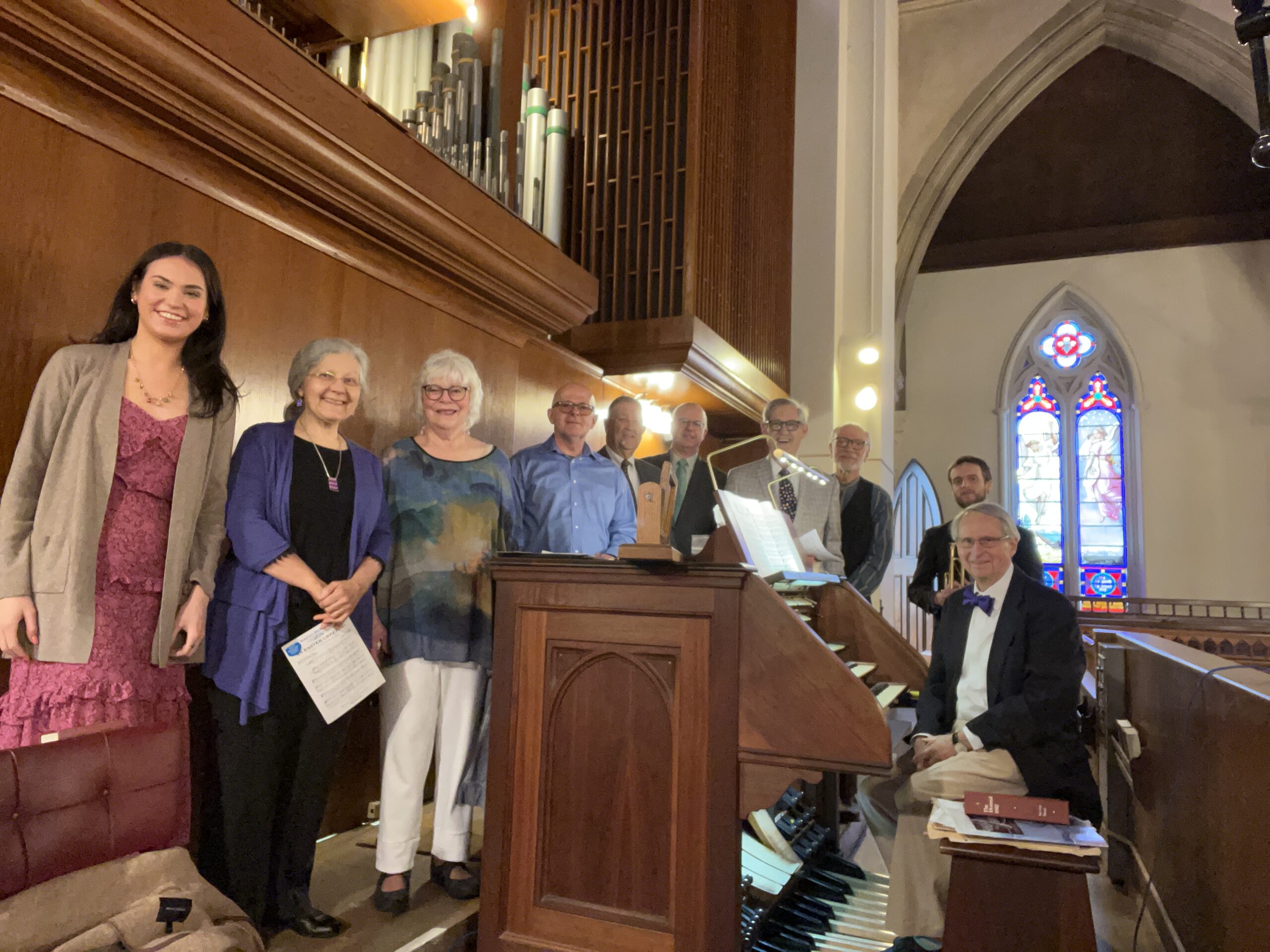
Music is an integral and important part worship at St. John’s.  The 9:30am English-language service is with organ and piano.  Three or four congregational hymns are sung from the 1982 Hymnal, Lift Every Voice and Sing, and other sources.   Instrumental pieces are played as a Prelude, Offertory Anthem, and Postlude. Guest musicians often enhance the service music with the sounds of winds, piano, strings, handbells, tympani, and brass.

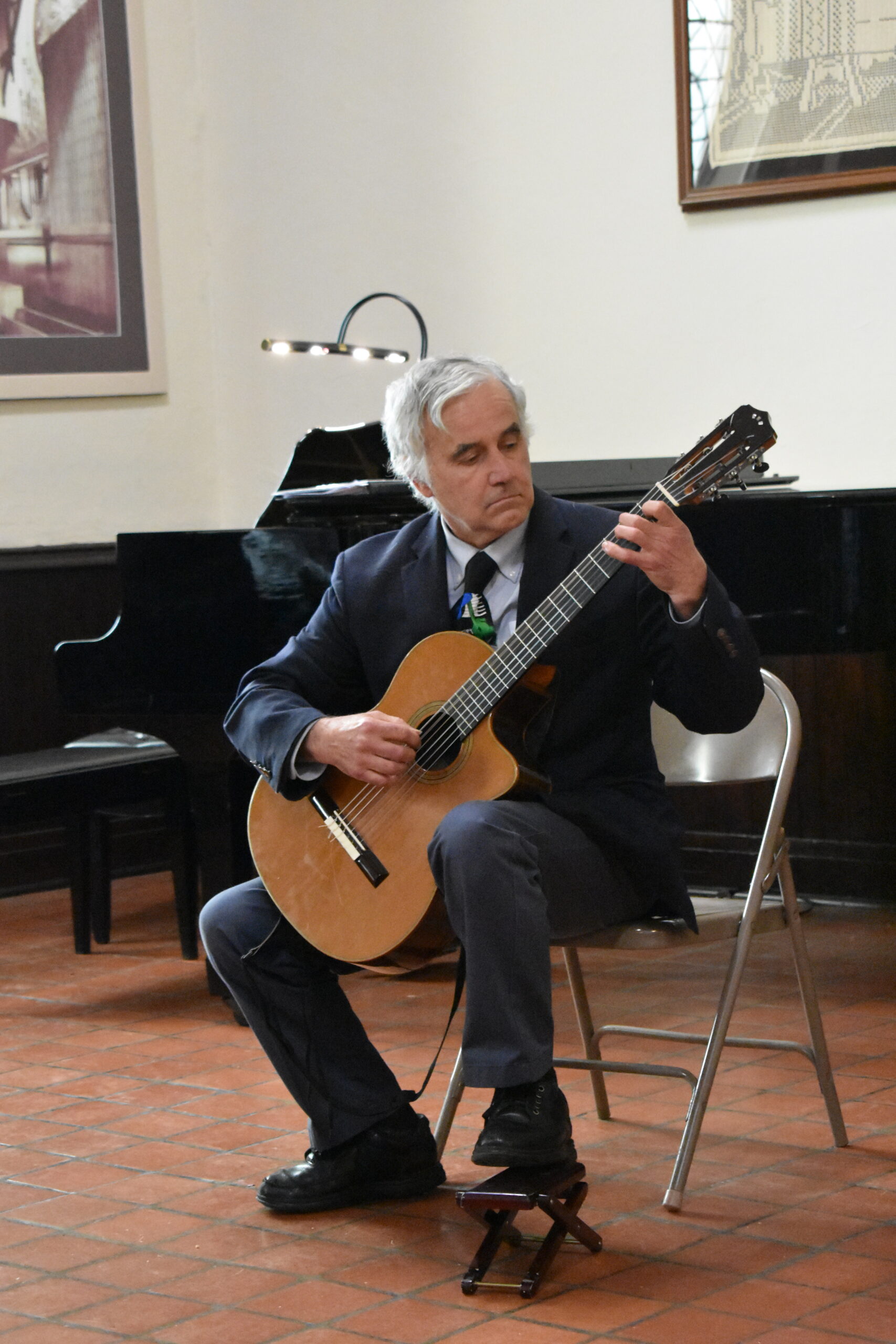
Music for the 11:30am Spanish-language service is provided by a guitarist, with congregational hymns selected from El Himnario and Flor y Canto.


Instruments

We are blessed with a magnificent pipe organ, designed and built in 1957 (and rebuilt in 1989) by Charles W. McManis.  St. John’s also owns a Mason & Hamlin concert grand piano (in our worship space), a Yamaha grand (in the Library), a small endowment fund to support guest musicians and music purchases, and an extensive library of choral and instrumental music.


Give to the St. John’s Music Fund

Click here or click the image below.

Musicians

Henry Church (guitar)

Henry Church is from Watertown, Connecticut. He had public school education and was a music student of Mr. Pettinichi. Henry continued on to the university of Hartford where he earned his bachelors of music degree in applied classical guitar. he has taught music for many years in Litchfield county prep schools including a 20 year stint at westover school with Bob havery. Henry has been the director of Spanish music at St. John’s since 2017.


Robert Havery (organ, piano, choir director)
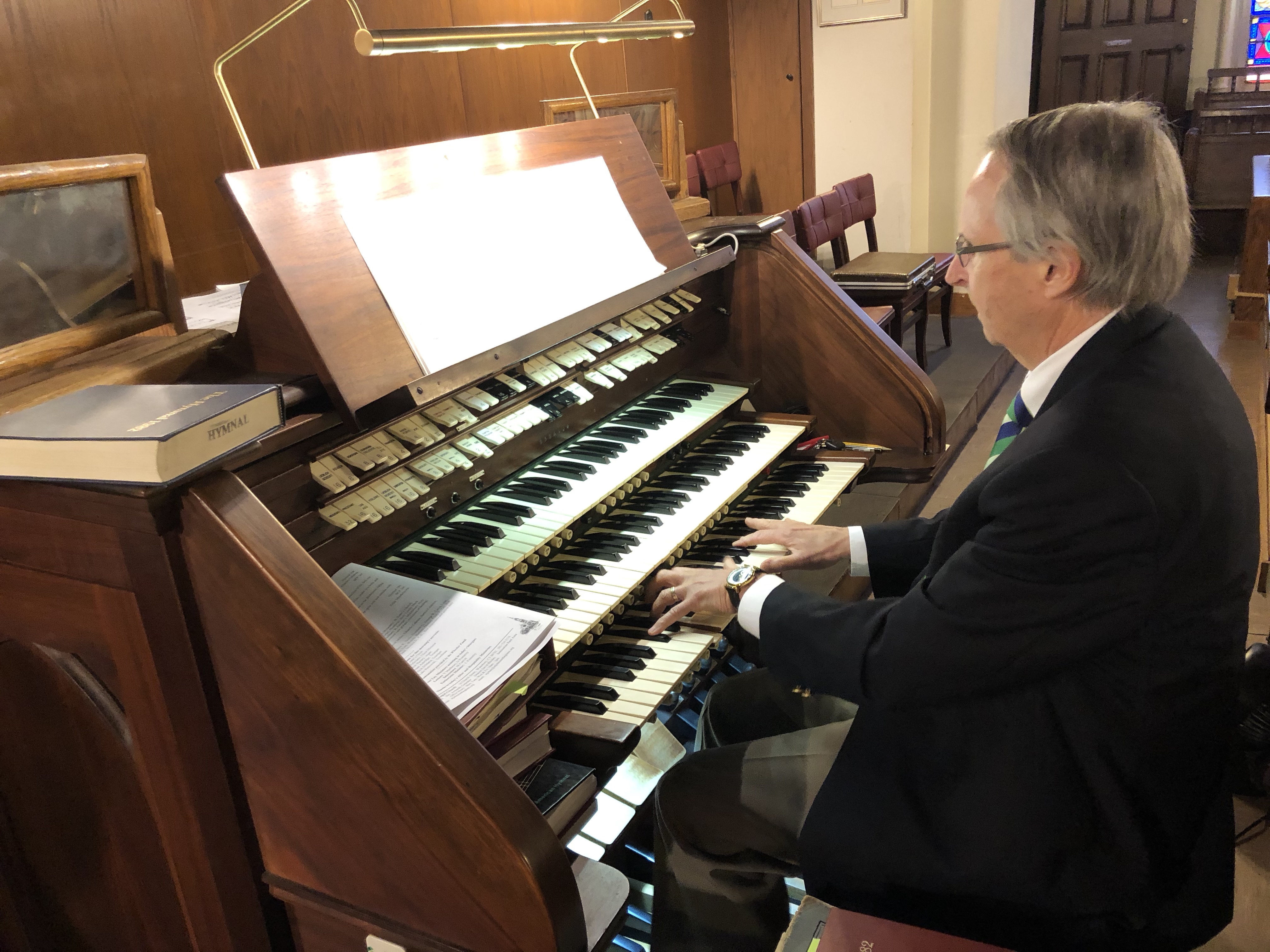
Bob was the Organist and Choirmaster at St. John’s from 1969 to 1986, and again from 1996 until his retirement in 2015. Since then he has come back to play regularly at our services, usually the first and fourth Sundays of each month. He holds Bachelor and Master degrees from Juilliard, and has played numerous recitals in Connecticut, New York, Canada and England. In 2020, Bob retired after a 52-year career of teaching music and celebrating the arts at Westover School in Middlebury. He hoped his legacy will be “that the arts are intrinsic to the life of a complete human being.”


Steven Minkler (piano, organ, bass)


Steve has been part of the Music Ministry at St. John’s since the mid-1990s, playing occasionally for both the English and Spanish services, and now twice per month at the English service. Steve served as Music Coordinator from September 2015 until March 2020, when the COVID pandemic forced worship services into an online format. During his tenure as Music Coordinator, he introduced the concept of a rotating schedule of musicians with different styles and instrumentations. Beside himself, these included organists Bob Havery, Daniel Scifo, and Scott Miller; guitarist Henry Church; percussionist Brian Ladden; a rebooted Adult Choir, and a four- to six-piece Jazz Ensemble which he launched with his daughter Rosemary.


Concerts

St. John’s is a magnificent acoustical space which is used as a public concert venue throughout the year. Click or tap here for a list of some of the concerts held at St. John’s since the year 2015.


Choir

Choir Sundays are back at St. John’s!! The adult choir is returning under the direction of organist Robert Havery and soprano soloist Larissa Davidowitz once per month at the 9:30am Sunday service. For more information, or to join the Choir, please call the church office at 203-754-3116.


St. John’s YouTube Music Channel

Click or tap here to enter the YouTube channel.

Our Hometown: Waterbury, Connecticut

City of Waterbury Website

Waterbury is known as the “Brass City” because of its long history as the center of the nation’s brass industry. It is the fifth-largest city in Connecticut, located in the west-central portion of the state, at the junction of Interstate 84 and Route 8. Waterbury is the metropolitan center of the 13-town Central Naugatuck Valley Region, an area with nearly 300,000 residents.

Although the brass mills that gave Waterbury its nickname are gone, the region features educational, recreational, and cultural destinations such as shopping malls, museums, nature trails, and amusement parks. Waterbury’s proximity to the ski resorts of northern New England and the beaches and boating of Long Island Sound to the south means that residents have easy access to a wide range of year-round, world-class recreational activities.

Connecticut’s three largest cities – Bridgeport, Hartford, and New Haven – are each within a 30-minute drive of Waterbury. In addition, New York, Boston, and Providence are less than two hours away.

History

Waterbury was settled in 1674 as a farming community, as an extension of the town of Farmington. Waterbury was formally established as a town in 1686, and incorporated as a city in 1853.

The city is situated on the banks of the Naugatuck River, which together with several tributaries provided abundant water to power industrial applications in the 19th and 20th centuries. The first brass in America was rolled by Abel Porter & Co. in Waterbury. They were the first to make brass by direct fusion of copper and zinc in 1802 and to commercially make gilt buttons. Hiram Washington Hayden invented the first brass spinning machine in 1851. The brass mills produced military supplies from the Civil War through World War II.

Waterbury is known for the beautiful architecture of its public buildings and stately residences, befitting its former grandeur as a center of manufacturing. City Hall is one of several Waterbury buildings designed by renowned architect Cass Gilbert. Originally completed in 1918, City Hall was once slated for demolition, but reopened in 2011 after a $36 million restoration.

Downtown development projects in the early 2000s included a regional campus of the University of Connecticut, a performing arts inter-district magnet high school, and a fully restored, 2,800-seat Palace Theater.

Waterbury’s neighborhoods each have long histories, distinct characters, strong ethnic identities, and active civic associations. The Downtown, Hillside, and Overlook neighborhoods – along with many landmarks and buildings, including St. John’s Church – are listed on the National Register of Historic Places.

Waterbury remains a “livable” city with excellent public services and a low crime rate compared to Connecticut’s other cities. The city maintains a network of parks facilities, ranging from neighborhood playgrounds to a small, multipurpose stadium.

Government

Waterbury has a “strong mayor” form of government with a 15-member Board of Alderman who are elected to two-year terms.

Waterbury has a well-earned reputation for rough and tumble politics. Since the 1930s, three mayors have served time in prison for corruption and other misdeeds resulting from the strong mayor system. Despite this, Waterburians are proud of their city and view their resiliency as a sign of character.

Employment & Income

Waterbury’s largest employers are the city itself, Waterbury Hospital, and Saint Mary’s Hospital. A variety of private enterprises such as banks, light manufacturing facilities, and retail centers contribute to the local economy.

Education & Youth

Waterbury is home to three colleges: CT State Community College-Naugatuck Valley Campus, Post University, and a branch campus of the University of Connecticut. Together, they enroll nearly 10,000 students in credit-bearing programs and many others in non-credit workforce training and lifelong learning courses.

The city has a variety of options for families with school-age children. Nearly 19,000 children (90% of whom are students of color) attend the Waterbury Public Schools:  18 elementary schools, three inter-district magnet schools, three middle schools, three high schools, one alternative education school, and one learning center. Waterbury is also served by a parochial school network of K-8 schools and one high schools. Unique among the states, Connecticut operates a system of regional technical high schools: Kaynor Technical High School is located in Waterbury.

Waterbury established the first Girls Club in the United States, has a vibrant YMCA facility, and is home to a nationally-recognized Police Athletic League.

Media

The independently-owned Waterbury Republican-American is the daily newspaper with both print and online circulation. The Observer is an alternative, free monthly newspaper. Two local radio stations provide a voice for community politics, in addition to statewide radio and TV.

Church Leadership

Episcopal Church in the United States

The Most Rev. Sean W. Rowe, Presiding Bishop

Episcopal Church in Connecticut

The Rt. Rev. Jeff W. Mello, Bishop
The Rt. Rev. Laura Ahrens, Suffragan Bishop

Clergy & Staff of St. John’s

The Rev. Roxana Videla, Associate Priest
Cindy Runge, Parish Administrative Assistant
Joe Seaman, Sexton
Henry Church, Musician (11:30 Sunday Service)
Robert Havery, Musician (9:30 Sunday Service)
Steven Minkler, Musician (9:30 Sunday Service)
Larissa Davidowitz, Vocalist and Choir Leader (9:30 Sunday Service)

Delegates to Diocesan Convention

Wonder Barratt
Marian Carroll
Andrew Skipp (alternate)

Officers and Vestry (2026-27)
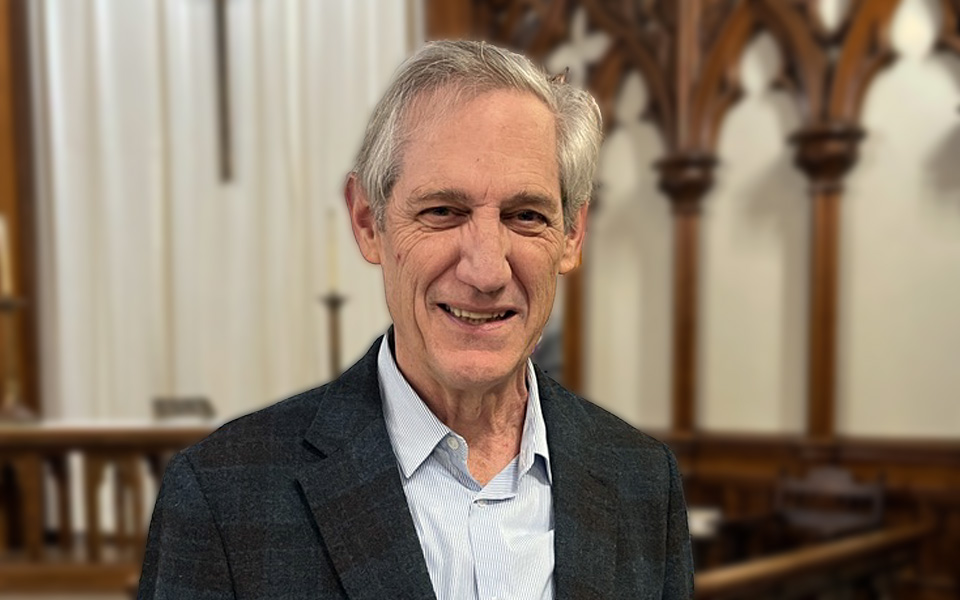

Andrew Skipp
Senior Warden

Gerard McDonald
Junior Warden

Lorraine Barker
Treasurer

Linda Pomeroy
Parish Clerk

Evanson Dover
Vestry (Term Expires 2027)

Bobbie Santa Maria
Vestry (Term Expires 2027)

(Vacancy)
Vestry (Term Expires 2027)

Donna Gervickas
Vestry (Term Expires 2028)

Donald Pomeroy
Vestry (Term Expires 2028)

Linda Pomeroy
Vestry (Term Expires 2028)

Wonder Barratt
Vestry (Term Expires 2029)

Nividia Luz Matute
Vestry (Term Expires 2029)

Neva Vigezzi
Vestry (Term Expires 2029)

Worship

The liturgical style at St. John’s is broad and inclusive.

Weekly

On Sundays, Holy Eucharist or Morning Prayer is celebrated at 9:30am using the Book of Common Prayer Rite II, and at 11:30am (Spanish Book of Common Prayer). Several times during the year, the two services are combined into a bilingual English/Spanish service held at 10:00am.

Lent through Easter

Lent begins with two services of Holy Eucharist and imposition of Ashes at noon and 7pm on Ash Wednesday. There are added services of meditation, prayer, Evensong, and Stations of the Cross during the Lenten season. Holy Week offers services on Maundy Thursday, Good Friday, an Easter Vigil on Holy Saturday, and two Easter Sunday celebrations.

Christmas

Christmas Eve services include a 7:00pm Misa en Español, and a 10:00pm service with Holy Eucharist, lessons, carols, and special music. There is a 10:00am service on Christmas Day.